
In this article, we focus on Procurement From China. For many years, China has been an isolated country where communism ruled the way people approached their everyday challenges. The Chinese revolution and the Japanese war with China changed people’s attitudes. However, it was only during the 1980s that China started trading with the Western world and opened its borders to foreign trade.
Since this change in mindset occurred, China has been growing rapidly and has become the manufacturing capital of the world. It supplies companies all over the world and has incorporated Western standards into its companies.
Although China has been trading with the whole world for almost 40 years now, a number of African, specifically South African, companies are still very worried about the perceived quality they get from China. They seem to think everything you procure from Europe and the USA (United States of America) is superior, and hence, they are happy to pay a premium for these products.
This article will thus attempt to explain the procurement process when procuring from China and how to control the quality when procuring from them.
The first step is to find a supplier in China to procure. It is to understand the platforms the Chinese community uses. They prefer communicating with WeChat and not WhatsApp, although they are starting to migrate to WhatsApp these days. China does not have Google as it’s banned; you will thus have to find a different way of searching for products in the Chinese community. The platform the Chinese use is called Alibaba. For a long time, people from the Western world believed that Alibaba was where Chinese companies tried to scam Western companies. But by now, Alibaba is one of the biggest companies in the world, and suddenly, the Western world has to acknowledge that it’s a real platform that works for procurement.
Alibaba has also launched AliExpress. This platform allows you to procure once-off products like a retail site and get them delivered to your home address in a few weeks. Products are thus shipped directly from China to your doorstep. This is convenient and opens China to the world from a retail perspective.
After the platforms are identified to operate on when searching for products from China, the search for quality products will start. Alibaba actually has a verification process that tells you how long the supplier has been registered with them and their status. The best suppliers are tagged as golden suppliers. When using the search function on Alibaba, several suppliers will pop up that can provide the products or services your company needs. You can then contact the suppliers via the platform, e-mail, WeChat or WhatsApp. The Chinese suppliers usually respond quickly with technical write-ups, lead times and pricing.
When all the proposals have been received, the shortlisting should start. Considering the quality of the submission, pricing, manufacturing capabilities, quality standards and track record, a few companies should be shortlisted to provide the product or service.
Once these companies have been shortlisted, it’s important to physically inspect their facilities. A number of companies offer this service, based in China, and will do the inspection on your behalf. This can work well, but often, the buyers want to visit the facilities themselves to get comfortable with the supplier.
Booking flights and planning a trip to China is not that expensive if you compare the amount of money that could be saved on this project and projects in the future. Work with the potential suppliers you are planning to see and get them to help you arrange the accommodation and domestic travel.
Once you arrive in China, Chinese suppliers usually treat your group like royalty. They make 100% sure you are comfortable. Just make sure you are prepared to eat and drink a lot every evening.
Arrange your meetings before you travel, and make sure you leave enough time to visit the factory that manufactures your products. Be very careful if they have a story about why you cannot see the factory. Once you are in China and go to the factories, you will see who the best-rigged company is. You often find trading houses that buy from any company in China and then sell to the rest of the world. They only have offices, and although they connect you with the factories, buying directly from the manufacturer is better.
A good indicator when you buy in China is the price; people often say that they buy products for less than half the price they pay in South Africa, but be careful as this is not the norm for good quality products from China. We have found that you get a big range of products from China, certain products are very cheap and follow no quality control or standards and then other products are more expensive but comply with all the standards and follow stringent quality control procedures. A typical saving that can be expected when purchasing good quality products from China is in the range of 20-30% after shipping and clearing costs have been taken into consideration. This range is what we found from experience in the technical equipment and materials sector, but it will probably change in each sector you procure in.
You also find that companies in China are very good at copying each other. When you get proposals from 10 companies, the proposals look very similar to each other. One company developed it, and all others adopted it for themselves. Thus, it would help if you spoke to the technical engineer in charge of the products you plan to purchase to ensure they understand their product and it’s the real deal. Chinese engineers are very clever and practical; you would find that they usually have one senior engineer in charge of the whole facility.
The inspecting parties should check international codes and standards. Chinese companies usually have all their approved codes and standards on their wall, but it’s also important to ensure this is valid and that they are approved and understand these codes and standards. The bigger companies in China are usually geared towards the export market and comply with all the international standards. The companies would also offer two prices when you ask them to price, one for local standards and the other for international standards. The Chinese standards are very practical but won’t work if your project is designed to other international standards.
Another interesting fact about Chinese companies is that government-owned companies are usually the strongest and best to procure from. With the Chinese government promoting state capitalism, you find several government-owned companies in various sectors. These companies are well-run and usually very stable. It’s the opposite when you enter Africa, and African companies often wrongly have an African mentality in China.
Once the inspections have been completed and the preferred companies are chosen to work with, ensure prices and lead times are fixed. China is very used to delivering products on time, and we have found that they are much more diligent than South African suppliers. Most South African suppliers are agents for European and American products in any way, so you get the product plus their markup on it, and they don’t have control over the lead times.
Procurement From China notes that although Chinese companies keep to their lead times, shipping is often a problem, and identifying the correct shipping and clearing agent is important for a project. Many Chinese companies have preferred shipping agents, but if you have found a good one, it makes sense to use them for all your shipping needs and build a relationship. Clearing the products on the Chinese and South African sides can often be challenging, and having a clearing agent who understands the process makes it much easier.
As a rule of thumb, we often send a representative to China to ensure the products loaded are correct and that they get loaded onto the vessel in time. Depending on your products and lead times, you can also use inspection agencies in China.
Payment terms with Chinese companies are also very important. Ensure you only pay a small deposit and the rest of the money once the products are ready to be shipped. You will battle to get better terms than this from Chinese suppliers, but as you build a relationship with them, they also become more lenient towards you.
Once your products arrive in South Africa, ensure you inspect them and are fully happy with your purchase. If you are not completely happy, contact the suppliers, and they will try to assist you as much as possible. If the products are in accordance with your requirements, make sure you give feedback to the Chinese company, as they really appreciate it.
If you have gone through one procurement cycle from China, you will feel more confident about procuring from them in the future. You can also continue to procure from the same company without having to do as many checks each time as you have already established they satisfy your needs.
It often helps to employ a procurement agent who works within South Africa and handles this whole process for you. You indicate what products you are interested in, and the procurement agent handles the whole process until your products are delivered in South Africa. It costs a bit more, but it makes your life much easier and reduces your project risk.
With the African market becoming more mature and understanding the project execution models better, there has been a big rise in EPC (Engineering, Procurement and Construction) projects being executed in Africa.
Although EPC projects have been executed worldwide, it’s a very new model for Africa and South Africa and project houses do not really understand how to execute the projects using an EPC execution model.
The traditional consultants, mostly based in South Africa, have been used in the EPCM (Engineering, procurement and construction management) execution models. This model draws a clear line in the sand between the consultant doing the engineering and management and the construction contractor doing the construction. The EPC project execution model takes this line away, and the consultant and contractor must work together to execute the project.
This is very new to the South African consulting market, which traditionally enjoyed the EPCM models and being in charge of managing the construction contractor. It’s also very new to the South African construction industry. The construction contractors were used to getting a bill of quantities and prices and taking no engineering risk for the projects.
This phenomenon has led to the birth of a new breed of EPC contractors that can handle the engineering, procurement and construction components of the project. These EPC contractors have all the in-house skills to execute these projects successfully.
In a desperate attempt to keep up with the industry, some engineering consultants and construction contractors form alliances to execute EPC projects together. This can work in principle, but combining the two cultures makes it very difficult to execute these projects smoothly. You often find that these relationships only last for one or two projects, and then they end up in the courts.
The biggest reason for this disconnect is that the engineering consultants want to charge their services per hour or at least build up their lump sum taking hours into consideration. The construction contractors, on the other hand, are used to lump-sum construction, and if something is not designed correctly, they can submit big claims to increase their price.
In this article, we aim to outline the process of EPC project execution and explore how the consulting engineering and construction components should align and collaborate to achieve successful project outcomes.
In the EPC project environment, the client does not usually give a detailed bill of quantities to price. They issue the EPC contractor a performance specification, telling them what they want from the project. It’s then up to the EPC contractors’ engineering team to detail the project during the tender engineering phase. You often find that the most mature EPC contractors have rates built up from previous projects and know exactly what a piece of infrastructure in that sector and location should cost. If we take a tank farm, for instance, the EPC contractor often quotes the project on a cost-per-cube basis rather than breaking the scope up into a bill of quantities. In some instances, when the client gives enough time to quote, the EPC contractor will work out their price using both options. The BOQ option is known as the bottom-up approach, and the “Cost per Unit” option is known as the top-down approach.
Once the project costing is done and the project is awarded to the EPC contractor, the real work starts. The engineering team must do value engineering, not by having one or two reviews but in a lot of detail. They have to work with the construction team and find better ways of executing tasks and reducing material costs as much as they can without compromising quality. This team will continue to support the construction and procurement teams for the remainder of the project.
Next, the procurement team needs to focus on getting the best prices with the best payment terms. Inexperienced EPC project managers often make the mistake of tying up all their materials and sub-contracts while they are tendering the project or very early on while setting up the new project. However, this is not how an EPC project should be executed but rather how an EPCM project gets executed. With the EPC project execution, you gain valuable information as you develop your engineering and installation methods. You often find that the way you wanted to execute a portion of the work during the tender phase has changed completely, and the service providers you were talking to during the tender phases are no longer the right fit. It’s also a fact that your negotiating power improves a lot once you have the job in the bag. Once the service providers know you have won the job, they take the cost very seriously, and you often find that you have a lot of options and get better pricing for the same services or materials.
It’s also very important that the EPC project manager understands who to use as sub-contractors. Common mistakes project managers make is to assume that big companies know what they are doing and then try to sub-contract a large company. The rule of thumb would be not to sub-contract to a company that’s bigger than your own organization, but in general, keep it much smaller than yours. Although there’s nothing wrong with big companies, it’s very difficult to control such a large organization, and you often get caught between your client and another big company with some commercial dispute, and it will flatten your company in the process. When you consider tendering an EPC project with a large corporation, it would be better for the larger company to lead and the smaller party to sub-contract.
A good way to find value for money in EPC project execution is to find owner-run smaller businesses where all the knowledge and skill lie with the owner and a few of their employees. Even though larger organizations have great track records, you are never sure what team you will get if you execute the work. It also happens in the EPC environment that things keep on changing as the project progresses. Although change management is very important in these projects, certain changes might be changes that the EPC contractor needs to make while improving the execution strategy. In situations like this, it’s very important that your sub-contractors helping you with the project have a common goal and objective and are flexible enough to absorb some of the changes without following a change management process themselves.
When outsourcing any portion of work, ensure that you completely understand the scope and keep the risk with the contractor who can manage the risk. If you do a fuel storage tank, for instance, and you plan on outsourcing the civil works to a local contractor, it won’t help to give them a design and build contract for the tank foundations as they have probably never completed this scope of work. A better way to outsource this service would be to keep the design in-house, get them to do most of the standard civils themselves and then have your experienced personnel guide them with the foundations while using their tools and personnel.
When using EPCM execution models, it’s important to do a full work breakdown structure and then assign packages to each contractor that needs to be appointed. When executing an EPC project, try to avoid giving packages away, especially when it’s a large portion of the scope for subcontractors. If you do not have the skill in a certain area, perhaps look at doing a joint venture with somebody who has the skill and understands the scope of work. Outsourcing a scope without adequate knowledge or oversight poses a high risk of losing control over the project, while still being commercially responsible for its outcomes.
This leads us to the following point: Don’t execute projects on an EPC basis if you don’t understand the scope. A good way to get into EPC project execution is to start with EPCM models of execution until you feel comfortable enough with the scope to execute it on an EPC basis.
When pricing an EPCM project, the EPCM contractor takes some risk, but the only real risk is the risk of spending more hours on the project than they planned to spend. Although the risk is real, it’s a relatively low and can be managed with the correct change management procedures. The EPCM contractor thus adds some risk to their price, but it’s very small compared to the project’s total CAPEX. The real risk gets added when the construction contractor prices, and then the fact that the EPCM Contractor and construction contractor are not aligned could add a lot of additional cost to the project.
Understanding the risk component is very important when an EPC project gets priced. Different locations and complexities of projects carry different risk components. It’s thus very important that all these factors get taken into consideration to determine a risk component. A typical EPC risk component is in the range of 10-20% of the CAPEX. This sounds like a lot, but once you get into the project, this never seems enough. It’s also important to build enough profit margin into the EPC models, as this also creates a buffer during execution.
Once most of the engineering and procurement activities have been completed and the correct subcontractors have been selected, the construction activities can begin.
During construction, the EPC contractor must keep control of the project; it’s very easy at this stage to lose control. Every aspect of the project needs to be optimized during the construction phase. Project managers often make the mistake of judging each construction component from the budget they have built for the project. The biggest problem is that you approve cost for a certain scope of work because it falls within your budget, but then something changes on another piece of scope, and suddenly, you are way over budget for that portion. As an EPC project manager, you should thus drive each component of the project to ensure that optimal savings are generated. If you can do a portion of scope for a better price than you priced, make sure you bank this savings. You might need it later on in the project, where a component might cost you more than you planned for.
When the construction teams are on-site, the EPC contractor must have strong management on-site from their organization. The management team should consist of construction, contract, and engineering management. Health, safety, and environmental issues will be reported to the construction manager. With strong management on the construction site, problems and changes can be handled on-site and put to bed before it becomes a big issue. It’s also important that the in-house resources manage the client relationship on-site and the cost, schedule and quality.
A very good way of creating common objectives in an EPC project execution is to keep all the savings in a project account that is shared with the resources and sub-contractors at the end of the project. This creates a common goal for all the guys on-site and ensures your project has the right drivers during construction.
Although the EPC project manager does not have to be on-site full-time, he must visit the site regularly to ensure all parties are aligned. His project planner and contracts manager should join him. They should focus on construction progress and scope creep. Progress should be monitored to determine actual versus planned; a basic S-curve works well for this weekly progress measurement. The contracts manager should ensure that the scope is executed in accordance with the approved scope of work and accepted schedule.
If a problem is identified or delays occur, the team should meet as soon as possible to determine the impact, find a way to solve the problem or delay and record the outcome. The sooner problems or delays are identified, the better the project team’s chance of solving them or getting the project back on track.
Critical path management is a good way of managing the project schedule. By focusing on the important aspects and ensuring they get executed correctly, the team can focus on keeping the project on schedule. When the items that are not on the critical path get delayed, they get recorded but only become critical once they get close to the critical path of the project. This way, the effort is not wasted on managing everything, but only on the items that will impact the overall project schedule. This way of management is also known as the 80-20 principle.
Once the construction phase is executed successfully, the project moves to the commissioning phase. During commissioning, the client often gets involved to assist. During this phase, a transition must happen between the EPC contractor and the client. If this commissioning process is painless for the client and the project is a success, it will buy a lot of loyalty from the client. Also, the important resources on the project must be on-site during this phase to ensure problem shooting gets done effectively.
During the commissioning phase, very experienced resources are needed, this is not the place to save any money, but to ensure the asset works. If something goes wrong during the commissioning, you want the correct resources on-site to solve the problem. There’s a common example where the client was battling to commission a machine and had to call for expertise. When the expert arrived on site, he set one screw, and the machine started. He gave the client his very expensive invoice for this work, the client complained and asked why it’s so expensive as he only set one screw. He responded that setting one screw is not worth a lot of money, but knowing what screw to set is.
After the asset is commissioned, the EPC contractor usually has a 52-week defects liability period. During this phase, the EPC contractor often helps with operations and maintenance. Ensuring the knowledge is transferred from the construction phase helps and ensures that defects can be repaired without major cost implications.
Once the defects liability period is over, the EPC contractor’s liabilities are usually over, with some exceptions for certain OEM equipment. The OEM liabilities will usually be back-to-back, and the OEMs will usually honour their own guarantees.
If the project is executed successfully and the EPC contractor is in the mood for more, the process starts again.
Motivation In An Engineering Project Environment. The engineering project delivery environment is very stressful, with many deadlines and complex solutions that must be overcome daily. It’s an industry where large corporate companies employ thousands of people on a specific project and the project employees migrate from one company to the next to follow the projects. This phenomenon created a pool of staff available to the industry, that has no real loyalty to the company they work for and focus on optimizing the remuneration they receive while on a project knowing that after the project, they will have to find something else.
Although it works well for the big project houses as they do not need to carry the staff burden when they do not have a project, they often have to execute projects with staff that is not really motivated to do the work, and the efficiency of the delivery suffers.

This article will thus focus on getting the most out of the people who work for you in the engineering project environment by motivating them correctly.
Many employers think that money motivates personnel, and you don’t have to do anything else if you pay them enough. Although money is important, and employees need to be able to support their families and meet their basic needs every month, studies actually show that it’s not such a big motivator.
It all starts with the recruitment process; once candidates have been identified and invited for interviews, it’s as important for the employer to sell their business, culture and objectives to the potential candidate as it’s for the candidate to sell him or herself to the employer. Once the employee gets excited about the business and understands his or her role in making this great organization better, you will have a motivated employee to start with.
Although qualifications and previous performance play a role in the selection process, that won’t get you anywhere if the employee is not motivated to succeed. Thus, attitude should play a major role in the selection process of the correct candidate.
Once your employee starts working for you, it’s important that they feel welcome and understand how they will add value to your organization and how important their role is to the business. The biggest mistake any employer can make is making the new employee feel insignificant in the organization. Even if it’s a graduate with no experience, they should understand that they are the next generation of engineers or project managers in this organization and can contribute to the success of the business.
As an employer, you could have tactics of employing the top academic students and ensuring you get them early by offering them bursaries and other incentives. Still, you won’t get real value from your recruits if you don’t understand how to motivate them. In many cases, you will find that personnel who were not necessarily top of their class become superstars in the industry. This happens when employers motivate employees correctly and appoint people with the right attitudes.
Although employees like structure within an organization, generalizing their progress and performance with the industry norm or their peers is the first way to kill enthusiasm and motivation. Big companies like to place employees into boxes, for example, you have to work as a Junior Engineer for 3 years, then you can become an Engineer. Or you can never perform better than another employee in the ranks even if you do your work much better and get to grips with the problems quicker than somebody else. Industry norms exist for the normal, but if you want to grow a motivated, performance-based group of employees, you should remove the shackles and allow them to move as quickly as possible.
Employees will always make mistakes; some will make more than others, but no one generally plans to do bad work or make mistakes. They should understand that making mistakes and learning from them is okay. As a motivating employer, you should be there to catch them when they fall but allow them to fall. Finger-pointing should not exist in your organization, and the only way for any employee to grow and perform is to take risks and learn from the outcomes of these risks.
Studies show ownership is one of the biggest motivators in an Engineering Project Environment for any individual or industry. When we feel part of something, we motivate ourselves from within. Thus, employees need to feel a sense of ownership in their work and know that it’s significant to the organization. As an employer or senior manager, you should be careful not to do all the new employee’s work for them or give them portions so insignificant that they do not feel ownership. Engineers are very bad delegators and want to do everything themselves; this often leads to junior engineers not getting enough exposure and demotivates them. Share schemes work wonders in giving staff purpose and motivating them; this can be introduced early in an employee’s career and keep them motivated for the rest of their career.
As a young engineer and recruit, writing a report is the best way to impress your seniors. There’s much more to your job than writing reports, but it’s a good way for the senior manager or engineer to judge your capability, thought patterns and logic. As a senior engineer reviewing the document, you must motivate your junior engineer. This does not mean that you take a red pen, give thousands of comments on the report, and tell the employee how bad the report was and how much better you can write it. Even worse than these comments is when the senior engineer decides to rewrite the whole report as he can do it better himself. This is a sign of weakness for the senior engineer. It will take some time before the Junior Engineer writes a perfect report; how soon that happens is up to the senior engineer and how he handles himself during the review and feedback process.
A major component of motivation starts with trust. If the employee doing the work knows that the employer trusts and depends on him or her, the employee is motivated to deliver this document to ensure the trust is kept in tack. If, however, the senior engineer does not trust that the junior can do the work and communicates this to anybody in the mood to listen to his whining, the employee probably won’t deliver the document following the senior’s requirements, and everybody will be unhappy and demotivated.
As with endurance athletes who usually run a lot more kilometres even after their body feels like they cannot go on anymore, employees can do much more than they think. Again, it is up to the employer or senior engineer to motivate and cheer the employee over the line. People achieve what other people believe they can achieve. So, if you believe in your employees and their abilities to perform the tasks, even if it might be a reach for them, they will be motivated to show you they can reach them. Once they reach the task, they will get a boost in self-confidence and reach ever-higher levels.
As with anything in life, there is no substitute for positivity. If employees grow up in a positive, motivated and performing environment, they will quickly adopt the company culture and make performance second nature.
Positive thinking is closely related to motivation, and a positive environment is critical to a company’s success. Negative personnel spread negativity like a virus and should be neutralized as soon as possible. If the employer cannot change a negative person’s attitude, they should find something else to waste their negativity on and move on to a different organization.
Working in a motivated team helps everybody be motivated towards a common goal. However, certain employees, especially in larger organizations, perform well on their own but cannot work in teams and think they would perform better by outperforming their peers to get to the top. This behaviour is as bad as negativity and should be eliminated from the group.
Once a group of employees is motivated to perform their tasks and reach their goals, the employer must understand that motivation is a continuous process and that it should be constantly maintained.
A good way of maintaining motivation in the organization is to constantly communicate progress and feedback to the group and show them the results of their performance. Having a transparent process that shows employees how the company is improving with their inputs and how effort relates to profit works very well.
The final and probably the most important aspect of motivation is understanding that it flows from the top. The whole company’s culture is derived from the culture and values of the top management instil. You often get smaller businesses that have somebody at the top that only cares about his back pocket, they don’t see the bigger picture and don’t like spreading the wealth. Although they might make enough money to keep the top dog happy, it will never grow into anything more and the staff will have no loyalty or motivation.
Please don’t present like an engineer! In the world of engineering, most professionals begin their careers in technical roles after graduating. They spend time understanding the specific area they are working in before transitioning into project or team management to execute various tasks. While engineers are experts at crunching numbers and solving complex problems, they often face a significant challenge: communication.
Taking it a step further, engineers often must present their projects or solutions to other engineers or financial institutions but fail to get their message across. Many solid projects or innovative products get lost in translation between engineers trying to present and sell their products and the audience they want to sell to. This article will thus attempt to give engineers some simple rules for technical presentations that they should follow to help them communicate their message to the rest of the world.
Engineers are wired to think in detail—they love spreadsheets and complex calculations. However, when presenting, they often structure their slides the same way, which is a mistake. Most people get lost in the details. If your slide is too cluttered, the audience won’t be able to follow or listen to what you’re saying. The general rule of thumb is to have no more than seven words per line and four or fewer lines per slide. In many of the presentations Steve Jobs made during his time at Apple, he only had one word on a slide, making a major impact on the crowd.
Focus on organizing your presentation’s structure. Don’t repeat slides; get to the point. A well-structured presentation flows from one slide to the next, making it a lot easier to present.
A picture says a thousand words; your audience may only remember the pictures you present and nothing more. You might think it’s very basic, but that’s exactly what you want to sell and get your clients to remember.
Most complex calculations and the answers to many questions can be illustrated on graphs. In the technical world, this makes perfect sense, and by walking your audience through the graph, you demonstrate a deep understanding of your topic in a practical, real-world context.
Many engineers start reading off notes when they get nervous and completely miss the connection with the crowd. Talk to the people like you would talk to your friends and try to get into this stride as early as possible during the presentation.
Don’t try to use big words you don’t usually use; the best approach is to keep it as basic as possible. If you use difficult words while presenting, the presentation will feel unnatural and will not have the impact you want.
Using humour correctly lets you win over your crowd quickly and break the ice. This does not mean telling a joke or, even worse, telling an engineering joke. It means being yourself, and if you find something funny while you present or pick up something witty to say during the presentation, don’t be afraid to use it. It’s also okay sometimes to make a fool of yourself or even use yourself as an example of how not to do something. People relate to this and tend to respect that you are strong enough to take a joke or humiliate yourself during the process. It also breaks the ice, and that’s all you want.
Make sure you talk to everybody in the room. Engineers often find a point at the back of the room and stare at that point while praying for the session to be over. This won’t work, and you won’t relate to anybody. You should thus practice to include everybody you present to and make eye contact with as many as possible people in the crowd.
The latest technologies help a lot and leave an impact on the crowd. Things like AR (augmented reality), VR (virtual reality) and normal videos can help keep the crowd interested, but remember, it’s still what you say that counts. Keep the technology portion of the presentation short and sweet, and get on with what you want to say. Nobody in the crowd is interested in your finite element analysis except the fact that it’s a nice picture to look at, and the answers say your solution works, that’s all.
It often happens during a presentation that you have rehearsed the presentation in your head or even in the mirror the night before, and then when you present, you go off-script. You suddenly panic and try frantically to get back to your script before somebody notices that you have lost your direction. In reality, nobody knows what you were planning to say in your head, and in most cases, they do not even realize it unless you start panicking. Stay calm and go with the flow; you will soon be back on track.
When people start to get nervous, they often feel like they need to do something with their hands or feet. So, you have people fidgeting while they present and don’t even realize it. Ensure you find a comfortable resting position for your hands before you start presenting. Many people choose to fold their hands while talking to avoid them from fidgeting. Another way to overcome this is to use your hands and arms while presenting. Don’t swing them like a crazy chicken, but if you use them when needed to get your message across, it works well.
Engineers often find a spot in the room, like a corner or a podium, and stay glued to it during their presentations. Ideally, though, you should move around the stage or in front of the audience to keep things engaging and create a more relaxed, informal atmosphere.
Presenting is like talking to a girl you want to impress. You can make it very formal and be so worried that you mess up and almost pass out stressing about the situation. Alternatively, you could relax, keep the discussion light and informal and make your crowd laugh. This will work well to win over the girl and the crowd.
Many people, especially older generations, believe you must dress very formally to present. You might feel pressured to find a tie and jacket for your presentation, but this is unnecessary. The key is to be comfortable. If you typically dress formally and enjoy it, that’s perfectly fine. However, if you prefer a more casual style and feel comfortable in it, that’s the way you should dress. Even jeans and trainers can work! We might even need to publish another article advising engineers on how to dress.
Nobody is born knowing how to present; even Richard Branson admitted that he was very scared of presenting when he started in business and had a few presentations he wasn’t proud of. It’s a skill you can train yourself to master, and it gets easier each time you do it. If public speaking and presenting in front of a crowd frighten you, try to present as much as possible. At first, it may not be easy, but after a few presentations, you’ll feel that it’s actually nothing and all in your head.
The infrastructure project development environment is extremely difficult to operate within. Many people claim to be project developers, but when asked how many projects they have developed, they always have many stories but few completed projects.
This phenomenon gives project development a bad name, and many project houses do not want to work for project developers as they feel the risks associated with non-payment and projects not proceeding to the execution phases are too high.
The following project development model was created based on experience working with various project developers and developing projects in Africa and internationally. By following the steps outlined below, project developers can improve their chances of closing projects, reduce development costs and time, and enhance the perception of project development.
Before anything gets done on a project, ensure that your project has a real business case. This does not mean building Excel spreadsheets or writing long documents. It means to do one A4 page business case for your project. A project is like a business; you have input, a process and an output. Start by who wants to buy, pay or lease the product or infrastructure you plan to develop. Once you identify the potential parties, understand what inputs you need to produce the outcome. Do high-level economics calculations for your project and ensure they make sense. Work out your turnover, profit, and payback period for a budgetary CAPEX. This should all fit on one A4 paper and give you an answer to proceed with the next step or not.
Once you understand your business case for your project and feel comfortable that you can pay the capital required back in a certain number of years, you need to sign up your offtake term sheet. This should be the first step before spending money on developing your project. You won’t know exactly what to charge for your product or service at this stage, but you will have a feel for it and agree on certain terms with your offtake. This will be done on a term sheet basis.
Suppose you feel confident that you have somebody willing to buy your product or service, and you have some form of a document signed that they are willing to pursue the project further. In that case, you can start looking at a feasibility study for your project. You will encounter several consultants wanting to do the feasibility study for you at enormous prices, and all of them will claim that they know exactly what to do. However, in reality, the experience in project development from African consultants is very limited. You do not need a massive feasibility study to show whether your project works. The term bankable feasibility study is used, but not many people understand what a bankable feasibility study is. You need an engineering study that gives you a +-10% CAPEX for the infrastructure with a financial model showing the project makes sense.
The project development world is all about the internal rate of return. In layman’s terms, it considers several factors and works out the hurdle rate of return for investors and bankers. A typical dollar-based IRR ranging from 10% to 20% would be sufficient for most investors, depending on their risk appetite in Africa. This IRR should tell you if your project makes sense and also give you a firm indication of what you can sell your product or service for. Once you get these results, you need to revisit your off-taker and discuss the price you can offer the service or product to them. You can proceed if they are still happy to proceed and sign up for this price. If you don’t get the buy-in from your off-taker, you need to stop, look for different off-takers or remodel your project to get your off-taker signed up. Many developers make the mistake of proceeding after this point without having anybody willing to take their product or service. This only leads to a lot of money being spent on development without any real prospects for the future.
Proceeding to the next phase, you need to find a facility where you will place your infrastructure. This process takes time, and finding the correct piece of land is very important. This also comes with a big cost, as you must purchase the land or sign a long-term lease. Many landowners are willing to negotiate with you, but they also want answers and cannot necessarily wait for your project to work before they get a commitment from you. Some landowners might be interested in providing their land as equity in the project, but this does not often happen. If you have a solid project, it’s a very expensive way of purchasing land. Things that should be considered during land negotiations are the environmental approvals and rezoning of the property.
In South Africa, there are essentially two types of Environmental Impact Assessments (EIAs). The first is called a basic assessment; this usually takes about six months to complete, and it’s not very expensive. The other type is called a full EIA and can take anywhere from 12 to 18 months to get approved. The type of EIA required depends on the specific infrastructure involved, making it essential to identify the necessary assessment early on and get the process moving as soon as possible. The environmental process will also need technical inputs from your engineering consultants, so getting a group that understands and has experience in the infrastructure you are planning to develop would help a lot. African EIAs can be done in shorter timeframes, but investors usually want international standards, which will add many extra requirements.
During the land purchase, the zoning plays a major role. If, for instance, the land is still zoned for agricultural use, it will be much cheaper than industrially zoned but will take a long time to rezone. Rezoning can take up to 3 years, so it’s very important to understand what zoning classification your project would require. Any good town planning outfit that knows the area would be able to assist with the zoning of the land and the required zoning for the typical infrastructure you plan to erect. Bulk contributions also have a major impact on the development costs for a project and should not be underestimated. If a property does not have enough power or water for development, the upgrades are very expensive and take a lot of time.
After all the issues associated with land acquisition, the biggest challenge is the regulations in the country where the project is planned. Depending on the project, several bodies regulate the infrastructure, and you will have to apply for the correct licenses to operate the infrastructure. The licensing process can also take a long time, so the earlier you identify the required licenses, the sooner you can secure them and move forward.
Something often overlooked is a project’s social impact on the communities around it, which can be both positive and/or negative. Still, it is important to understand the existing social environment and measure the project’s impact on this environment. Most financial institutions would require a thorough social impact assessment before investing in your project.
Several places in South Africa and abroad offer development finance as part of their suite. In reality, development finance is almost impossible to access. Some parties offer grant funding, especially when it’s a green and environmentally friendly project. Other institutions like the DBSA (Development Bank of South Africa) and PIC (Public Investment Corporation) would offer development funding in South Africa and Africa. Still, they are very selective, and you usually need all the boxes ticked in terms of EIAs, land and a bankable feasibility study. The PIC would be willing to fund 50% of the development in some instances, especially in Africa, but you will have to provide the other half in cash before their funding takes effect. If you find somebody willing to provide development funding, it will be very expensive, or they would want a large part of the equity in the project. The best way to overcome development funding is to keep the upfront costs as low as possible. You will, however, need some money for the upfront developments, which can be funded from previous savings, leveraging off existing assets, or selling equity in the project. Some project developers raise development funding on the stock markets but note that listing a company on the stock exchange is expensive and a big administrative burden.
Once your bankable feasibility is done, your EIA is approved, land rezoned and purchased, all regulatory requirements have been adhered to, offtake and supply agreements have been signed, you are ready to approach institutions for project finance. Project finance is speciality finance that caters to projects and uses the project as a ring-fenced business. Project finance is usually broken into two components: debt and equity. You will often hear the term debt-equity ratio. It means the percentage of debt and equity the project would attract.
Most commercial banks are willing to provide up to 70% of the project’s value in the form of debt. This would usually be done at a relatively good interest rate, depending on the type of project and the location. Banks will have a very stringent due diligence process and usually appoint technical and commercial advisors to evaluate the project’s viability. The rest of the money would have to come from private equity investors or the project developer itself.
Several private equity investors in Africa and abroad are willing to invest money into projects. Some funds focus on Africa, while others focus on certain types of infrastructure. They all have the same model: they get funds from individuals, pension funds or businesses to invest and need to optimize their return on investment for their investors. Private equity investors usually want to optimize the IRR of the project, and they base their offers on the IRR the project makes. In layman’s terms, the higher the IRR of your project that you are busy developing, the more interest you would get from private equity and the stronger negotiating position you will have. It’s usually good to speak to several private equity funds until you find the fund that works for you. Building a strong relationship with a fund or two also works well if you develop multiple projects.
Several other options exist to fund projects, but this article will not go into detail about each option, only mention some of them. Export credit is a good way to secure funding from certain countries if the equipment is sourced from that country. Crowdfunding is also becoming popular for funding certain projects, but it is still in its infancy. Venture capital has become very strong in America, and even in South Africa, SARS has established the 12j vehicle to encourage venture capital in the country. These offerings can all be tapped into to fund projects and optimize project funding.
After project funding strategies are determined, it’s a good time to appoint owners’ engineers to the project. The company that provided the feasibility study services is usually favoured for this role, as they already understand the project dynamics. Still, this company doesn’t have to be appointed for the owner’s engineer role. The owner’s engineer would usually be responsible for developing the scope of work for the EPC-and-O&M Contractor and managing them during the execution phase of the project. Thus, the owner’s engineer must understand the type of infrastructure involved and the experienced and bank-approved EPC and O&M contractors.
Selecting the correct contractor and engaging with them early will increase the likelihood of achieving success with the project. Many contractors encourage early engagement with developers and even help them with certain items at risk to secure the downstream work. It should, however, be noted that at the end of the day, the banks decide on the contracting strategy and the type of contractor selected. If the project finance route is selected, the banks want the main contractor to be appointed on an EPC basis with a single point of responsibility. They also want the contractor to have a balance sheet equal to or more than the project value. This is very important to them as they see it as reducing the project’s risk. Having experience in the type of infrastructure to be erected also plays a big role.
It’s also very important that the asset gets operated and maintained correctly to ensure the returns are realized over the total life cycle of the project. This is usually done by a separate contractor specialising in this work scope. Project finance will also not be released until the O&M contractor is approved and appointed.
Once all the contracts have been signed with contractors and off-takers, and all the environmental and regulatory conditions have been met, you are finally ready to execute the project. The process from starting development to being in a position to start building takes several years to complete. During execution, both cost and schedule are very important to the developer as they have built both those items into their economic models. If one of those items slips, it severely impacts their payback periods to the lenders and private equity investors. They usually also insure against cost overruns and slippages on projects like these. Once the EPC contractor has completed the execution phase of the project, the developer usually gets the contractor to commission the infrastructure with support from the client and owner engineer as required.
Once the asset is live, the O&M contractor will take it over and ensure it performs as expected. The EPC contractor usually has a 52-week defects liability period, during which they will repair any defective works. Once this period ends, the O&M contractor will continue with maintenance and repairs as needed.
Although project development takes a long time and faces many burdens during the development phases, it can pay off in the long run. It also gets easier once you have developed one project as you build credibility and equity to fund future developments. Once a team develops a project together, they often stick with the same team for many years and develop several projects together. This leads to sustainable work for all the parties involved.
More from EPCM
Two major execution models are used in the project environment: EPCM (Engineering, Procurement and Construction Management) and EPC (Engineering, Procurement and Construction). Although the project’s outcome should be similar, the two execution models have distinct differences. Both have their place in the project world, but it is important to understand when to select the correct model, as it could have a major cost and time impact on the project.
In EPCM execution models, the engineering contractor that’s appointed to complete the scope of work has to do most of the engineering and procurement for and on behalf of the client, appoint a contractor to handle the construction, and then manage the contractor to ensure the project is delivered on time. The EPCM contractor does not perform any construction but rather provides a service to the client. The client has to appoint a construction contractor separately and directly.
The EPCM contractor supervises and manages the construction contractor to ensure the project is delivered on time, within budget, according to quality standards, and without any safety problems. Risk management also plays a major role in the EPCM contractor’s scope of work. Regular risk reviews are conducted.
The appointed construction contractor does not have any engineering capabilities. They only focus on executing the project following the specifications and bills provided by the EPCM contractor. Any deviations from the scope of work provided to them by the EPCM contractor are handled through a formal change management process with approval from the EPCM contractor and client.
The EPCM contractor manages and certifies all payments made to the construction contractor. However, the actual payments flow directly from the client to the construction contractor. The EPCM contractor acts as the agent for the client as a service but never takes the financial risks of cost and schedule overruns on the construction contract.
The EPCM model works well in big project environments because the EPCM contractor and the client have a lot of control over the construction contractor. If done correctly, the EPCM delivery model can also help reduce total project costs. The construction contractor does not take all of the risks on his own, and thus, he does not have to inflate his pricing to cover the risk.
On smaller projects, the EPCM delivery model is more difficult to use as one often has to increase resources without major savings on the construction component. Although it is possible to execute any size project using the EPCM delivery model, it is often more productive to use the EPC delivery model on smaller projects.
Another limitation in EPCM delivery is that the EPCM contractor gets paid on a time basis, while the construction contractor usually gets paid on a lump sum basis. This misalignment can result in project suffering.
In the EPC model, the clients appoint the EPC contractor for a certain portion of the scope. The EPC contractor is responsible for Engineering, Procurement and Construction. Although many EPC contractors do not necessarily execute construction or even engineering themselves, they take full responsibility for the EPC execution.
From a client’s perspective, they have one point of contact and one responsible party to execute the work. From the client’s view, they now have a single point of contact and responsibility for all service and construction works on their project, namely the EPC Contractor. The construction risk is completely transferred to the EPC contractor. They still follow a formal change management process, and the EPC contractor remains responsible for the project’s detailed engineering. The EPC contractor will find it difficult to claim compensation for changes in the original quantities, as the EPC contractor themselves were responsible for determining the quantities in the original tender or proposal.
When using the EPC delivery model, clients often need to verify the EPC contractor’s work. When clients do not have an in-house engineering team that can verify the work, they often go to the market for Owner-Engineering contractors. An Owner-Engineering contractor then looks after the EPC contractor in a similar way to an EPCM contractor, but it’s a much smaller team handling exclusively review and verification work.
In the EPC environment, the EPC contractor invoices the client directly. They have sub-contractors under them that will then invoice the EPC contractor. This means that only one party is responsible for the money flow to all subcontractors after the client has paid the main EPC contractor for the scope. This way of execution reduces the administrative burden on the client and assists in controlling the spending on the project. The project also has significantly less risk of incurring corrupt and fraudulent activities that can often occur when several small contractors and suppliers are paid individually.
The lending agencies often determine the contracting strategy during project development. Most international financing institutions find comfort in the EPC delivery model, with one contractor taking responsibility for the entire scope of work. They also appoint strong Owner’s Engineers to assist them with appointing and managing the EPC contractor during execution.
When project finance is raised to execute the development, lending agencies often want the EPC contractor’s balance sheet to be at least the size of the project. This risk mitigation exercise for the banks ensures the project can stand independently.
When the EPC delivery model is used, the EPC contractor has more room for movement during the construction phase and can often use the design phase to optimize their delivery. The client has less control over the details, but this is often better for the project as a whole. Appointing the correct Owner’s Engineers to look after the EPC contractor also plays a major role in controlling the quality of the project without being overly prescriptive towards the EPC contractor.
EPC delivery models work well in big and small project environments and are the most common delivery model internationally. Many clients believe that EPCM delivery models are cheaper to execute because the EPC contractor has to include risk in the pricing of the EPC model. However, this depends on whether the risks allowed for during execution occur. If the risks allowed by the EPC contractor do not occur during construction, the EPC contractor makes more profit. If the risks do occur, they could wipe out profit on the project, and in many cases, the EPC contractor could lose money. In the EPCM environment, the client assumes most of the risk and can either achieve savings or incur losses, depending on how the risks materialize.
There is no right or wrong answer when comparing the EPC and EPCM project execution models. You must select the correct model for your project.
Several factors drive the selection of the correct model, the most important of which are project risk and who is in the best position to manage it. In many cases, the EPC contractor is better equipped to mitigate the risks associated with the project execution. However, in certain places worldwide, construction contractors may lack the maturity to effectively manage the risks involved in EPC project delivery, making the EPCM model a more suitable option.
As a client, these strategies must be decided early in project development and implemented accordingly. Choosing the correct partners and contractors to help execute the project also plays a major role. Clients should ensure that potential contractors have experience and an understanding of the delivery models before they appoint them.
Employing or contracting specialists in the contract management field during the early stages of a project can significantly impact its overall success. Once a contracting strategy is selected, it is advisable to adhere to it throughout the project’s duration.
Executing projects should not be a difficult or painful process. If a Client has a different experience, they should consider alternative options.
Due to the high cost of instruments, sensors and technical limitations, industrial drone uses were relatively limited until recently. Largely thanks to the great advancements in cellphones—and the adoption thereof by the masses—the cost of GPS’s, magnetometers, accelerometers, gyroscopes and smaller, smarter and better cameras has been driven down considerably.
Now seen as one of the biggest and most revolutionary developments of the century, drones have disrupted numerous segments of the global economic sphere.
The applications are seemingly endless, with many benefits still being explored. Ranging in applications from filmmaking to farming to industrial uses, drones have managed to make a major impact on the commercial, personal goods, military and surveying services sectors.
From rapid surveillance deployment to scanning an unreachable and/or dangerous area of interest, drones are proving to be extremely beneficial in places where man cannot reach or perform in a timely and efficient manner.
Increasing work efficiency and productivity, saving the client money and decreasing risk to its employees, improving accuracy, refining service and customer relations, and reducing turnaround times are a few of the top uses drones offer industries worldwide.
Drones are enabling companies to do what could never be done before.
Drone surveying consists of various aspects and a combination of technologies.
Photogrammetry is a proven technology that dates back to the mid-19th century and is as old as modern photography. It’s the science of making measurements from photographs, especially for recovering the exact positions of surface points. The simplest example is the distance between two points that lie on the same plane parallel to the photograph. The distance can be determined and measured by normal methods if the scale of the image is known. This same principle is expanded to 2D and 3D by using multiple overlapping photos and combining the data with the flight log of the drone to include data such as GPS, height, roll and pitch. Factor in basic trigonometry, leaving you with an accurate 3D model of the desired area.
Surveying drones are typically pre-programmed to survey the desired area. The flight plan is uploaded to the drone, once launched the drone drones executes the flight plan by means of various sensors and constantly autocorrects to stay on course. Once the mission is complete, it returns to a predetermined area for landing. Live telemetry ranges can be anything from 2km to 65km depending on the technology implemented, however, the pre-programmed mission can be executed indefinitely after initial upload and launch. This means the UAV will execute the mission, depending completely on its onboard sensors and electronics – completely autonomous!

Figure 1: Screen capture of actual survey in process
Accuracy of less than 10cm can easily be achieved in areas free of vegetation with the help of strategically placed photo control or ground control points that are surveyed before the flight and marked so that they can be captured on the photos before processing. This ensures that the point cloud obtained from the photos does not distort over large areas and maintains a high level of accuracy. One can think of the point cloud as a net, and the ground control points are fixed anchors with known values that hold the net in position.
Mining is one of the great adaptors of drone technology, and it’s transforming the way rock stockpiles, waste dumps, tailings dams and open-pit volumes are measured. Rather than conducting surveys by having humans walk around stockpiles with a GPS, drones are now used to fly over the area, taking many photographs that are then stitched together with photogrammetry techniques in the cloud to form a 3D model of the site.
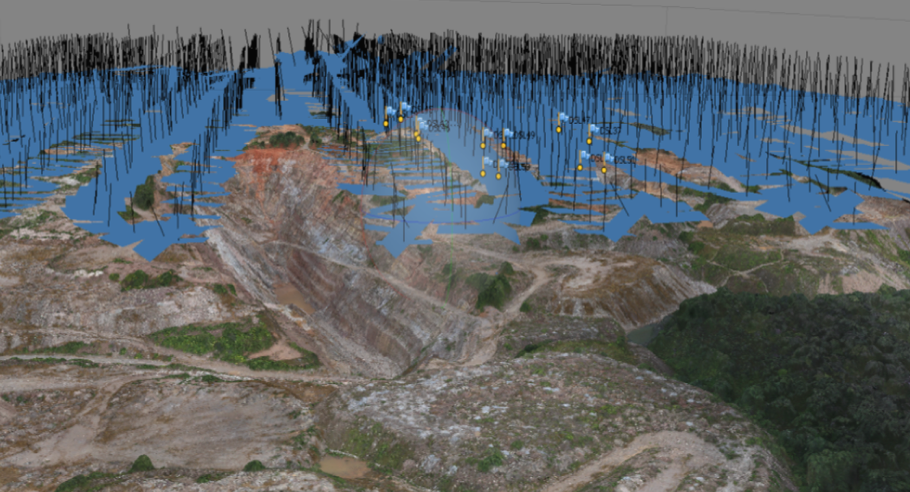
Figure 2: An overview of a Drone Survey with camera positions indicated

Figure 3: Millions of Z values calculated per pit – Extract dense spatial content 100s of XYZ values calculated per m2
From the point cloud data above, a wireframe and mesh are created, which enables accurate volume, cut and fill type calculations.

Figure 4: Fine detail wireframe of the area to enable volumetric calculations, contours and elevation

Figure 5: TIN is a Geographical Information System (GIS) used to represent a surface, shown here with a colour ramp
The photos obtained can be combined in what is called an orthophoto or ortho-mosaic. This is essentially a large, high-resolution photo of the desired area that is georeferenced and can be overplayed onto Google Earth. It is useful for visual interpretation or can serve as a base map for mapping.

Figure 6: Bird’s eye view corrected for terrain distortion
A high level of detail can be obtained from the data that aids in road condition assessments, planning and erosion monitoring.

Figure 7: High-resolution image with contours of eroded haul road damage
The 3D model makes calculating volumes of any shape or size easy. Any survey data taken before can be incorporated into the model, such as a base for the stockpile.

Figure 8: Digitizing a base and calculating volumes
The two major factors associated with running a successful oil and gas operators are cost and safety. With the introduction of aerial drones in this area, modern technology has provided a solution to these concerns.
The oil and gas industry can present rugged and challenging environments in which to work. Locating, detecting, and surveying often prove to be cost-prohibitive and inefficient because of shutdowns and safety being the utmost priority for oil and gas ventures.
A conventional survey will be done on perhaps a 10m x 10m grid, whereas the drone data produces a grid of 100s of points per square meter. In addition, this data is captured in a fraction of the time compared to traditional surveys. Typically, 20-30min of flight time equates to roughly weeks forth of traditional methods. One can easily survey 1000ha per day using a single drone.
Drone technology can easily survey and inspect offshore oil rigs and platforms safely without stopping production.
For corridor surveys, up to 65km can be covered in one flight of around one hour. This is particularly useful for road surveys, pipeline inspections, power line inspections, etc.
Surveys of dangerous and/or compromised areas can easily and safely be done with drones without stopping production.

Figure 9: Hi-resolution orthophoto of the plant area for planning
Orthophotos are a great way of monitoring and reporting progress.

Figure 10: Overlay comparison on Google Earth

Figure 11: Inspection of 100m smoke stack with drone
Quality data that were previously too expensive and time-consuming can now rapidly be obtained. This gives valuable insight into operations and their monitoring.
Archiving is also an added benefit. Whether for productivity comparisons, tonnages moved, environmental impact studies or rehabilitation, drone data provides valuable “snapshots in time” for all these applications.
Drone surveying has become an inexpensive and safe way to obtain high-resolution data in dangerous, inaccessible areas without stopping production.
Read more on EPCM
The infographic introduced by EPCM below explains the fractional distillation of crude oil and its processing.

In this article, EPCM discusses the Liquid Natural Gas (LNG) Value Chain. Natural gas is projected to be the fastest-growing major energy source globally through 2040.
This energy source carries tremendous benefits for the consumers and the environment. It is versatile, clean-burning, and abundant.
Natural gas resources can be located in remote areas, and they are produced from subsurface reservoirs, both onshore and offshore.
A complex value chain facilitates the transportation of natural gas to consumers worldwide. It begins with the process of bringing natural gas to market, which involves safely drilling wells to extract gas and other reservoir components. The extracted gas may then be processed on-site or transported to a facility for further treatment and processing.
Natural gas extracted from subsurface reservoirs can contain non-hydrocarbon, including Hydrogen Sulphide, Nitrogen, Carbon Dioxide, and Water.
The treatment removes these components from the natural gas, and a solvent is used to absorb Carbon Dioxide, Hydrogen Sulphide, and Water. Heavier liquids are removed from the lighter gas for separate processing. Water is removed, and the remaining natural gas is ready to be cooled into a liquid.
Depending on the source of the natural gas, it may need to be transported to a liquefaction facility. The gas is transported by pipeline and can travel hundreds of kilometres or just a few metres, depending on where the gas treatment facilities are located relative to the liquefaction plant.
The liquefaction plant cools the gas to minus 162 degrees Celsius. As the gas cools, its volume is reduced to 1/600th of its original size. The resulting liquefied natural gas is clear, colourless, and ready for transport.
The LNG is stored in large insulated tanks until it is ready for shipment. Pipes connect the storage tank to a loading jetty. Regardless of outside temperatures, the LNG inside the tanks and loading facility remains at negative 162 degrees Celcius. The LNG is then pumped into specially designed LNG ships.
LNG shipping tankers transport natural gas across the globe. Some of the largest LNG vessels, like the Qmax, are longer than 60 city buses. Each Qmax LNG ship can carry enough natural gas to power 70,000 homes for an entire year.
When the LNG ship arrives, it is guided to the receiving terminal, where the LNG is unloaded and stored in insulated tanks. The LNG is then pumped into a regasification plant, where it is warmed and converted back into a gaseous state. The natural gas is then ready to complete its journey.
A network of pipelines delivers natural gas to power plants, where it is used to generate electricity for urban areas and supply industrial facilities involved in the manufacturing of steel, cars, and chemicals. Additionally, it provides heating, cooking, and drying for homes and office buildings.
Concentrated Solar Power (CSP) has long been proposed as a source for energy generation applications. The purpose of this EPCM article is to summarise relevant theories regarding the main aspects of concentrated solar-powered energy production. The main objective of the topics covered is to provide the reader with a better understanding of the sun’s path, an overview of CSP, various solar tracking methods used in the industry, and the implementation of CSP for energy generation.
Azimuth and elevation are the two coordinates that define the position of a celestial object at any given time in the sky as it is viewed from a certain location. An example of a celestial object is the Sun. The azimuth is the angle between a celestial body and the true geographical North measured clockwise around the observer’s horizon. The elevation is the vertical angular distance between a celestial body and the observer’s horizon or local plane. For an observer on the Earth, the sun’s elevation is the angle between the direction of the geometric centre of the sun’s apparent circular shape and the observer’s local horizon. The concept of coordinates is used in various industries, such as engineering, navigation, astronomy, mapping, mining and artillery (Rouse, 2006).
The degree of freedom a system has defines the capability of a system to move in more than one direction. As explained in section 1.1: Azimuth and Elevation, the sun follows two paths. For accurate solar tracking, a tracking device should have a two-degree-of-freedom system. A two-degree freedom system could track the sun along the azimuth and elevation axis. A one-degree-of-freedom system can be used, but a larger tracking error would then be experienced. A static system can also be used; this specific system has zero degrees of freedom (Richard G. Budynas, 2011).
Solar tracking error refers to the deviation between the sun’s actual position at a given moment and the direction in which the solar tracking system is aimed at that same moment. This error is an angular error and is typically measured in radians or degrees (Forristal, 2003).
A solar receiver is a device used in high-temperature solar concentrators. Its main function is to convert solar radiation to heat in a concentrated solar power system. The receiver aims to absorb as much solar radiation as possible and transfer the absorbed energy to the heat transfer fluid thermodynamically. Thus, the receiver is a vital component in any solar concentrated solar power system.
In the specific case of a parabolic dish reflector system, the receiver may be designed in various ways that best suit the application. Receivers can be manufactured from various materials, including aluminium, steel and copper. The receiver can sometimes be manufactured from fibres, normally done for air-based systems. The amount of radiation absorbed by the receiver depends on a few variables, namely the geometry of the receiver, the use of a selective absorber and the use of glass with low iron content. Being such a vital component in a concentrated solar-powered system, the heat loss from the receiver can greatly influence the system’s efficiency. One can expect that a receiver’s main heat loss mechanisms are conduction, convection, and radiation. These are all aspects that should be considered when designing a solar receiver (Govender, 2013).
A static system consists of no moving parts. Static solar systems used in industry are normally photovoltaic panels that are static mounts orientated in a specific direction. A static tracking system has a large solar tracking error as the system can’t follow the sun’s path. A high solar tracking error limits the methods by which the system can generate energy. The reason for this is the sun’s path changes every day of every year, so the static mount won’t even be able to have zero degrees error even once a day (Kalogirou, 2004; Richard G. Budynas, 2011).
One degree of freedom system consists of mechanical parts that can only move in one direction. This direction normally is along the elevation axis. One degree of the freedom tracking system is limited in energy generation capabilities but less limited than a static system. The one-degree-of-freedom mounted tracking system cannot follow the sun’s exact path, but it can get close enough to somewhat reduce the solar tracking error. One degree of freedom system can follow the sun’s path to an extent that makes concentrated solar power methods such as the Fresnel reflector design possible (Kalogirou, 2004; Richard G. Budynas, 2011).
A two-degree-of-freedom system has many moving mechanical parts to allow the system to follow the sun’s path in both the azimuth and elevation directions. A two-degree freedom system has very few limitations in its method of energy generation. This statement can be made because of the system’s low solar tracking error. As previously explained, the sun’s path changes constantly along the azimuth and elevation axis, and with a two-degree-freedom system able to follow both these paths, systems with high efficiencies, such as parabolic or dish design methods, can be implemented with great effect. A two-degree-of-freedom system requires high initial costs to manufacture because of the complex mechanical moving system it possesses. These high costs are, however, rewarded with high energy efficiency (Kalogirou, 2004; Richard G. Budynas, 2011).
A solar tracker is defined as a device that can orientate a payload towards the sun with the payload being any form of solar energy harnessing devices; ranging from solar panels, parabolic troughs, Fresnel reflectors and parabolic dish reflectors (Kalogirou, 2004).
A manual tracker has to be repositioned by an operator throughout the day. This will normally have to be done in small increments of time, depending on the type of results the system has to provide. The solar dish mounted on a still manual tracking system used for this research project would have to be adjusted every few minutes to obtain accurate results. If photovoltaic panels were to be used, the operator would only have to adjust the system a few times a day, and the efficiency would remain relatively high. In general, there will be some shadow aligning the object to allow the operator to align the system with some accuracy. This is a very basic type of solar tracking method. It would be difficult to establish solar tracking errors as human error factors come into play. The tracking error depends on the time increments between repositioning. This system is not cost-effective and would not normally be implemented in industry (Shah, 2011; Zip, 2013).
A passive tracker is a system consisting purely of mechanical parts with no electricity to power a motor to get the gears moving and, in turn, move the solar mount. A passive tracker normally consists of a housing filled with a compressed gas fluid with a low boiling point driven to one side or the other using solar heat. This process creates gas pressure, which moves the centre of gravity of the entire system to one side. This system is very difficult to calibrate correctly and will, more often than not, mean a large tracking error (Shah, 2011; Zip, 2013).
An active tracker consists of a mechanical system using several sensors that send the needed electricity to the motor and gears, which try to align the system with the sun. An activity tracker can operate in one direction, consisting of a single motor, sensor, and a set of gears. However, a significant drawback of this one-degree-of-freedom system is that it experiences large tracking errors, as the sun’s path spans two directions, as mentioned earlier in the report. In contrast, an active tracking system can be implemented as a two-degree-of-freedom system requiring at least two motors, multiple sensors, and an appropriate set of gears. This configuration reduces tracking errors, enabling the system to accurately track the sun along the azimuth and elevation axes (Shah, 2011; Zip, 2013).
A chronological tracker is based on the theory that if the exact position of an object is known (the exact longitudinal and latitudinal coordinates of the object) and if the precise time and date are known, certain calculations can be done to determine the exact position of the sun from the objects specific position. As one can imagine, the chronological tracker produces a very small solar tracking error. This is because the sun’s position is determined via accurate mathematical calculations. The chronological tracking method is considered one of the best solar tracking methods (Shah, 2011; Zip, 2013).
Concentrated solar power is a method of harnessing solar energy by collecting the rays from the sun and concentrating them on a single point or axis. There are two main types of single-axis tracking systems: parabolic trough collectors and Fresnel reflector collectors. A two-degree-of-freedom system, namely a heated receiver thermodynamic system, is used for many different applications in industry. The systems mentioned above will be examined in more detail below (Washburn, 2012).
Parabolic trough collectors can effectively supply heat to a working fluid, increasing the fluid’s temperature to up to 400oC. As one can expect, this wide range of heat supplied makes this system applicable to many applications. A schematic representation of a parabolic trough collector can be seen in Figure 1 (Kalogirou, 2004). The setup consists of a sheet of reflective material bent into a parabolic shape, a black metal tube enclosed inside a glass tube to reduce heat losses. It is then mounted along the focal line of the receiver. Once the parabolic trough is constructed, the system is pointed towards the sun. The system can start operating as the reflective material reflects the sun’s rays onto the receiver (Kalogirou, 2004).

Figure 1: Parabolic Trough Solar Collector
The parabolic trough collector can be placed in an East-West direction, allowing the system to track the sun from North to South. The main advantage of orienting the collector in this specific manner is allowing the full aperture to face the sun for most of the day and, in turn, receive less sun exposure in the early mornings and late afternoons. Another orientation one can consider is to place the parabolic through in a North-South direction, which will allow the system to track the sun from East to West; this has the exact opposite effect of the East-West orientation as the system will have greater losses at noon and be more effective in the mornings and late afternoons. A parabolic trough solar collector’s tracking mechanism can be classified as a mechanical or electric system (Kalogirou, 2004).
Linear Fresnel technology relies on an array of linear mirror strips which concentrate the sun’s rays onto a fixed receiver that is normally mounted on a linear tower. The linear Fresnel collector field is similar to a broken-up parabolic trough collector; however, the difference is that the linear Fresnel reflector does not have to be of a parabolic shape. Large receivers/absorbers can be constructed, and the absorbers do not have to move. A great advantage of this type of solar collector is the fact that it uses flat or elastically curved reflectors, which are a lot cheaper when compared to parabolic glass reflectors. Another advantage of a linear Fresnel reflector field setup is that the reflectors are mounted close to the ground, which minimizes structural requirements. A typical linear Fresnel reflector field can be seen in Figure 2. South Africa’s most notable Fresnel reflector field is the Khi Solar One CSP plant near Upington. More information on the solar power plant can be found by following the links below.
http://www.energy.org.za/news/khi-solar-one-near-upington-achieves-a-technological-milestone
 Figure 2: Linear Fresnel Reflector Field (Kalogirou, 2004)
A parabolic dish reflector system is a point-of-focus collector that normally can track the sun along both the sun’s paths, concentrating as much solar energy as possible onto a receiver located at the focal point of the dish. To obtain higher efficiencies from the system, the dish structure must be able to fully track the sun to reflect as much of the sun’s photons as possible onto the thermal receiver. The receiver absorbs the radiant solar energy and converts it into thermal energy in a circulating fluid. The thermal energy absorbed can then be converted into electricity by using an engine generator coupled directly to the receiver of the energy, which can be transported through other materials such as pipes or elements to a central power-conversion system. Parabolic dish systems can achieve very high temperatures, sometimes exceeding 1500oC. Parabolic dish reflectors are the most efficient of all collector systems. A schematic representation of a parabolic dish reflector can be seen in Figure 3 (Kalogirou, 2004).

Figure 3: Schematic of a Parabolic Dish Collector (Kalogirou, 2004)
A concentrated solar power method, such as a parabolic or dish design, concentrates as much of the sun’s photons as possible on a single spot or line in the system. The single spot or line previously mentioned is commonly known as a receiver. This receiver can absorb many photons and convert them into heat. The receiver will then act as a boiler in a typical thermodynamic system, which can generate energy for various applications. This system can produce higher efficiencies than most of the other solar tracking systems. As with many other applications, high efficiencies mean high setup costs, a common drawback of a complex heated receiver thermodynamic system (Kalogirou, 2004).
Photovoltaic is a method in which solar cells are used to absorb photons of light to excite electrons to a higher state of energy; this allows the electrons to act as carriers for electricity. By using this method, solar energy can be turned into electrical energy. The solar cells are normally set up next to each other on a flat plate, which allows the maximum surface area of all the solar cells aligned next to each other to be exposed to the sun. A common angle to which this solar cell plate is tilted towards the sun is 23o from the horizontal.
As with any method of harnessing solar energy, a few advantages and disadvantages accompany the photovoltaic method. An advantage is that a photovoltaic system setup is relatively cheap when compared to other methods, such as a heated receiver thermodynamic system that is implemented on a large scale. Unlike solar tracking dishes, the solar tracking error does not greatly affect the efficiency of a photovoltaic system. Photovoltaic solar cells used in the industry typically have an efficiency range of 15% to 19%, which can be considered a disadvantage (Jayakumar, 2009).
In many solar energy applications, a thermodynamic process is followed to achieve the desired result. A simple thermodynamic closed-cycle typically consists of the following components: a closed-cycle curated by a pump/compressor, a boiler and a condenser/heat exchanger. The boiler, in this case, is the solar receiver that is heated by the concentrated solar power of the sun. An example of a closed thermodynamic cycle used to produce steam to power a steam turbine, which in turn generates electricity, can be seen in the visual representation by following the video link below.
The Brayton cycle is probably one of the most popular thermodynamic systems used in the industry. It mainly uses air as the working fluid. A thermodynamic cycle can be classified as an open or closed cycle. In an open cycle, the working fluid is only used once through the system, while in a closed system, the working fluid can be used several times.
An open-cycle system consists of a compressor, boiler (or combustion chamber), and a turbine. In concentrated solar energy applications, the combustion chamber is replaced by a receiver heated by the concentrated power of the sun (Roux, Bello-Ochende, & Meyer, 2012).
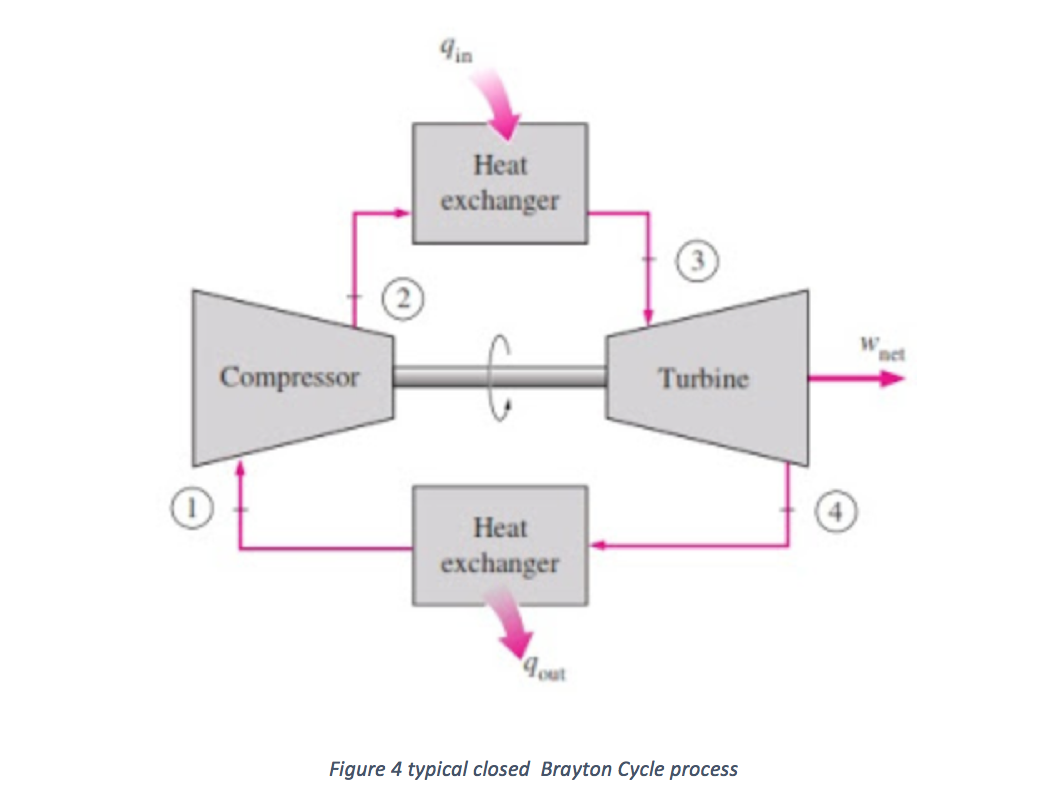
Figure 4: Typical Closed Brayton Cycle Process
A closed cycle consists of a compressor, combustion chamber, turbine and heat exchanger. In Figure 4, the Heat exchanger after phase 2 will act as the combustion chamber, and the Heat exchanger after phase 4 will act as a condensing unit. As mentioned above, the same principle will be implemented for concentrated solar applications, as the combustion chamber will be replaced by a receiver that is to be heated by the concentrated power of the sun.
The Brayton cycle is known for the high-efficiency output the system can produce. A visual representation of how the Brayton cycle is implemented in the CSP industry can be seen by following the link below (Roux, Solar Tracking for a Parabolic Dish Used in a Solar Thermal Brayton Cycle).
The Rankine cycle is a thermodynamic cycle that usually operates as a closed cycle. A Rankine cycle can be implemented in solar applications similarly to the Brayton cycle. The combustion chamber in a closed cycle is replaced by a receiver that is then heated by the sun’s concentrated power. To maximize energy capture, an appropriate shape and size must be selected for the receiver. In the Rankine cycle, the working fluid is typically water, as the cycle is commonly used to model the performance of steam turbine systems (Claus Borgnakke, 2013).
The Kalina cycle is similar to the Rankine cycle as this system also operates as a closed thermodynamic cycle. The Kalina Cycle can create mechanical energy by converting thermal energy through a thermodynamic process. These two cycles use different working fluids in the respective closed cycles. Unlike the Rankine cycle, the Kalina cycle uses a mixture of water and ammonia as the working fluid. Water and ammonia have different boiling points, this solution can thus boil over a larger temperature range which in turn means that more heat can be extracted from a reservoir containing this fluid. This working fluid enables the Kalina cycle to produce higher efficiencies. The Kalina cycle can be effectively implemented in a concentrated solar power system using the same principles as explained in sections 6.1 and 6.2 (Claus Borgnakke, 2013).
Ghajar, A. J. and Cengel, Y. A., 2011. Heat and Mass Transfer: Fundamentals and Applications. 4th ed. New York: McGraw-Hill.
Budynas, R. G. and Richard, J. K., 2011. Shigley’s Mechanical Engineering Design. 9th ed. New York: McGraw-Hill.
Le Roux, W. G., Bello-Ochende, T. and Meyer, J. P., 2012. Thermodynamic optimisation of the integrated design of a small-scale solar thermal Brayton cycle. Department of Mechanical and Aeronautical Engineering, University of Pretoria, Pretoria.
Le Roux, W. G. et al., 2012. Solar tracking for a parabolic dish used in a solar thermal Brayton cycle. Department of Mechanical and Aeronautical Engineering, University of Pretoria.
Rouse, M., 2006. “Azimuth and Elevation.” Whatis.com, 1 January. Available at: http://whatis.techtarget.com/definition/azimuth-and-elevation [Accessed 1 March 2016].
Govender, P., 2013. Construction and analysis of the receiver for a solar thermal cooker system. University of KwaZulu-Natal, Durban.
Jayakumar, P., 2009. “Solar Energy.” Renewable Energy Cooperation-Network for the Asia Pacific, India.
Shah, A., 2011. “Solar trackers guide.” Green World Investor, 6 July. Available at: http://www.greenworldinvestor.com/2011/07/06/solar-trackers-guide-types-passivesingle-axisdual-axis-2-axisprice-and-uses/ [Accessed 6 March 2016].
Washburn, K. K., 2012. “Concentrating solar power technologies.” Solar Energy Development Programmatic EIS, 6 December. Available at: http://solareis.anl.gov/guide/solar/csp/ [Accessed 2 April 2016].
Sonntag, R. E. and Borgnakke, C., 2013. Fundamentals of Thermodynamics. 8th ed. Michigan: Wiley.
Kalogirou, S. A., 2004. “Solar collectors and applications.” Progress in Energy and Combustion Science, Cyprus.
Zip, K., 2013. “How does a solar tracker work.” Solar Power World, 4 April. Available at: http://www.solarpowerworldonline.com/2013/04/how-does-a-solar-tracker-work/ [Accessed 6 March 2016].
Sustainable.co.za, 2002. “Renewable energy systems.” 1 January. Available at: http://www.sustainable.co.za/energy-efficiency/solar-cookers/parabolic-solar-cookers.html [Accessed 1 July 2016].